

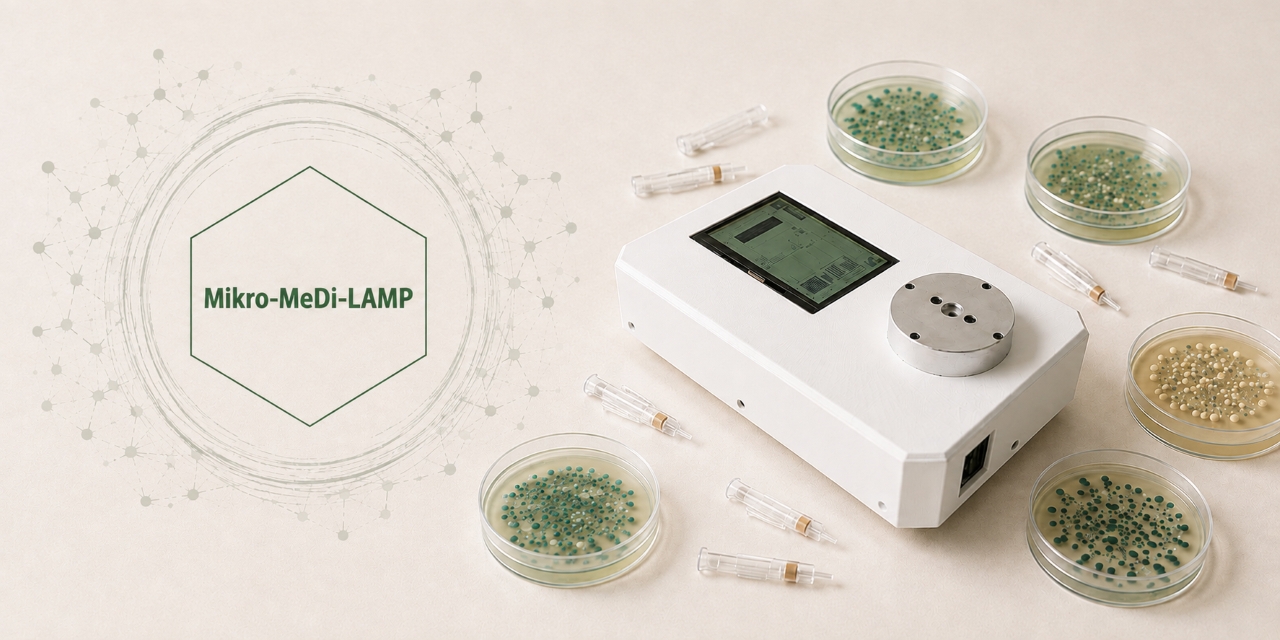
Bacterial pathogens: Causes of sepsis

In Germany, around 85,000 people die each year because of blood sepsis - more than from stroke and heart attack combined.
Sepsis is predominantly caused by bacterial pathogens, but invasive fungi can also trigger severe systemic infections. In addition to delayed detection, the increasing spread of antimicrobial resistance poses a growing challenge.

While antibiotic-resistant bacteria are receiving increasing attention, the significance of resistant invasive fungi is still often underestimated. The improper use of antibiotics in human and veterinary medicine, as well as the use of fungicidal plant protection products (PPPs) in agriculture, promotes the development of such resistance.

Detection of invasive microorganisms

using magnet-based diagnostics via LAMP

The early detection of human pathogens and the identification of existing antimicrobial resistance (AMR) are crucial in the diagnosis of life-threatening bloodstream infections. Rapid and reliable pathogen identification enables targeted antimicrobial therapy and thus improves patients’ chances of survival.

Contact us now
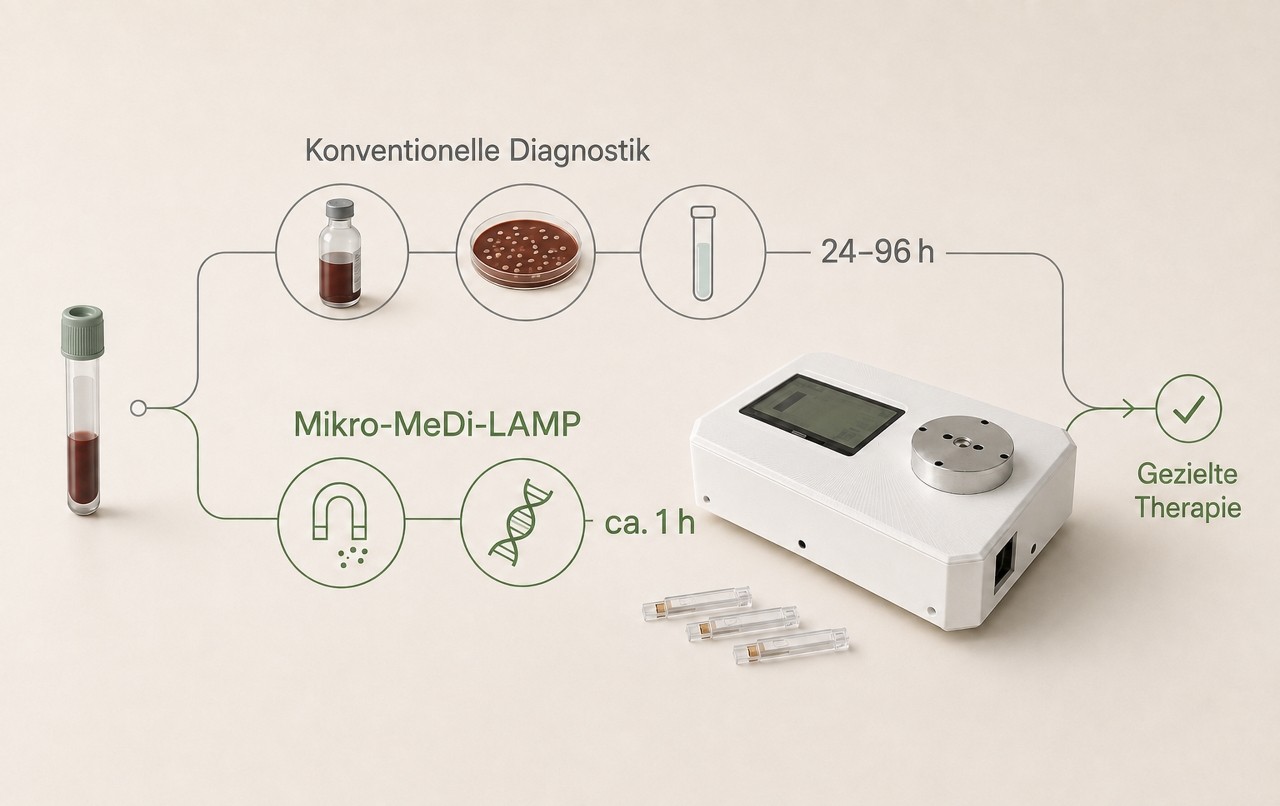
Infographic: Mikro-MeDi-LAMP delivers results in about 1 hour compared with 24–96 hours for conventional diagnostics

Sepsis Diagnostics

In conventional sepsis diagnostics, potential pathogens are first cultured in blood cultures and then identified using microscopic, biochemical, or molecular biological methods. Initial results for bacterial pathogens are usually available after about 24 hours at the earliest, while results for fungal pathogens often take 48 to 96 hours. Additional time is required for resistance testing, such as in an antibiogram.

Since rapid results are not available during the critical early phase of sepsis, initial therapy is usually empirical. It is based on the suspected site of infection, the clinical situation, as well as local resistance data and guidelines. However, due to the increasing development of resistance, this nonspecific approach is increasingly insufficient, meaning that patients’ condition can deteriorate significantly by the time the results are available.

Methodology

From blood sample to pathogen detection

MeDi-SEP

Enriching pathogens from blood

Magnetic nanoprobes bind to cell wall structures, enabling selective enrichment directly from the blood sample.

MeDi-LAMP

Identifying pathogens and resistance

Rapid isothermal amplification detects specific gene sequences with high specificity—including both pathogens and resistance.

MeDi-TEC

Detecting amplification products

Compact handheld device for clinical point-of-care use – sensitive, patient-centered, and requiring no laboratory infrastructure.

Project fact sheet

Project title

Mikro-MeDi-LAMP: Detection of invasive microorganisms through magnetic-based diagnostics using LAMP

Duration

01/2026 – 12/2028

Funding

Project call „Gesünder.IN.NRW“ funded by state resources and the European Regional Development Fund (ERDF)

Project budget

approx. 1.6 million Euro

Collaboration partners
  • Fraunhofer Institute for Molecular Biology and Applied Ecology IME
  • University Medicine Essen, Microbiology
  • Research Center Jülich GmbH
  • GeneCon International GmbH
Project leader

Dr. Florian Schröper

Aims
  • Development of a point-of-care testing (POCT) system for rapid, culture-independent diagnostics of microbial sepsis pathogens and their antimicrobial resistances (AMRs)
  • Efficient, individualised therapy for vulnerable patient groups and shorter treatment times

Mikro-MeDi-LAMP is part of the „Gesünder.IN.NRW“ project call and is funded by state resources from the MKW as well as by the European Regional Development Fund (ERDF).

Co-financed by the European Union and the State of North Rhine-Westphalia

Contact us!

Gain faster decisions and more control over your raw materials and products. If you are interested or have any questions, please get in touch.

Michelle Wesselbaum

Authorized Signatory, Scientific Director M.Sc. in Molecular and Applied Biotechnology, RWTH Aachen

Jaqueline Hüsken

Scientific Assistant M.Sc. in Molecular and Applied Biotechnology, RWTH Aachen