
What are mycotoxins?

Mycotoxins are toxic secondary metabolites produced by certain molds that can develop during the cultivation, harvesting, storage, or processing of agricultural raw materials. Among the most important mycotoxins are aflatoxin, deoxynivalenol, zearalenone, and ochratoxin A. Even at very low concentrations, they can be harmful to health and are suspected in some cases of being carcinogenic, immunotoxic, or hormonally active.

Contamination of food with mycotoxins, therefore, represents a significant global challenge for food safety. In the European Union (EU), strict maximum levels apply to many mycotoxins in accordance with Regulation (EC) No. 1881/2006.

Which foods are commonly affected?

Cereals, maize, nuts, and products derived from them are particularly frequently affected. However, dried fruits, coffee, cocoa, and spices may also be contaminated. Mycotoxins can even be detected in milk after livestock have consumed contaminated feed.

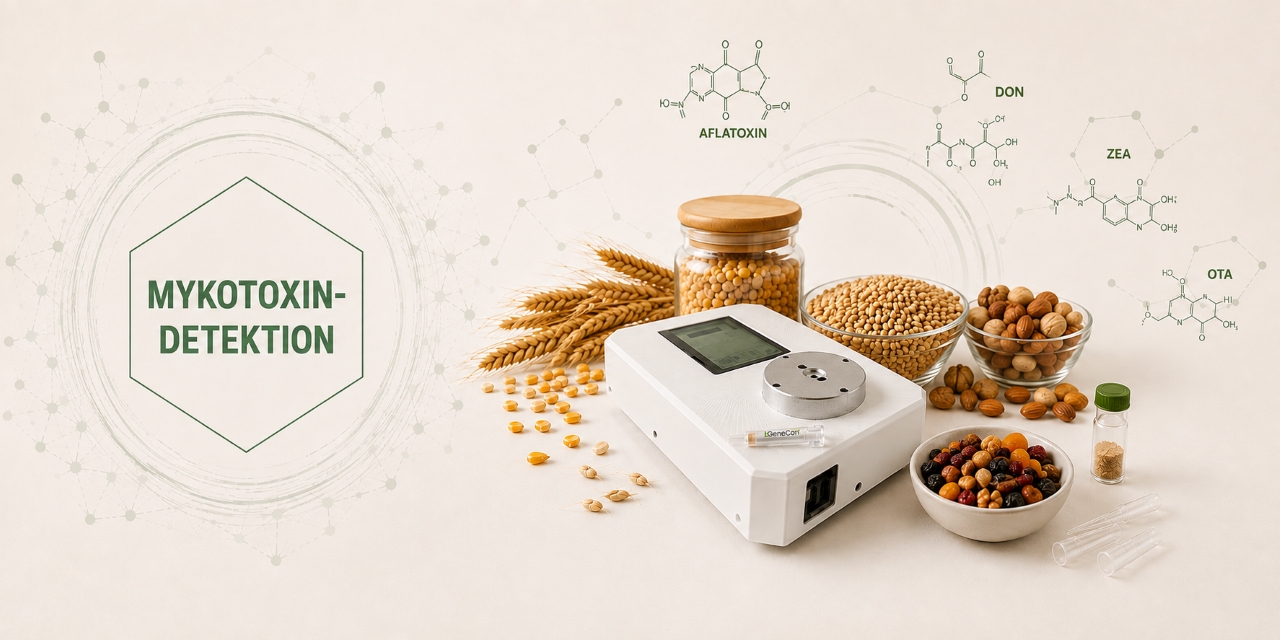
Key mycotoxins (aflatoxin, DON, ZEA, OTA) and commonly affected foods such as maize, cereals, nuts and dried fruit

Rapid Mycotoxin Detection

using magnetic immunoassay

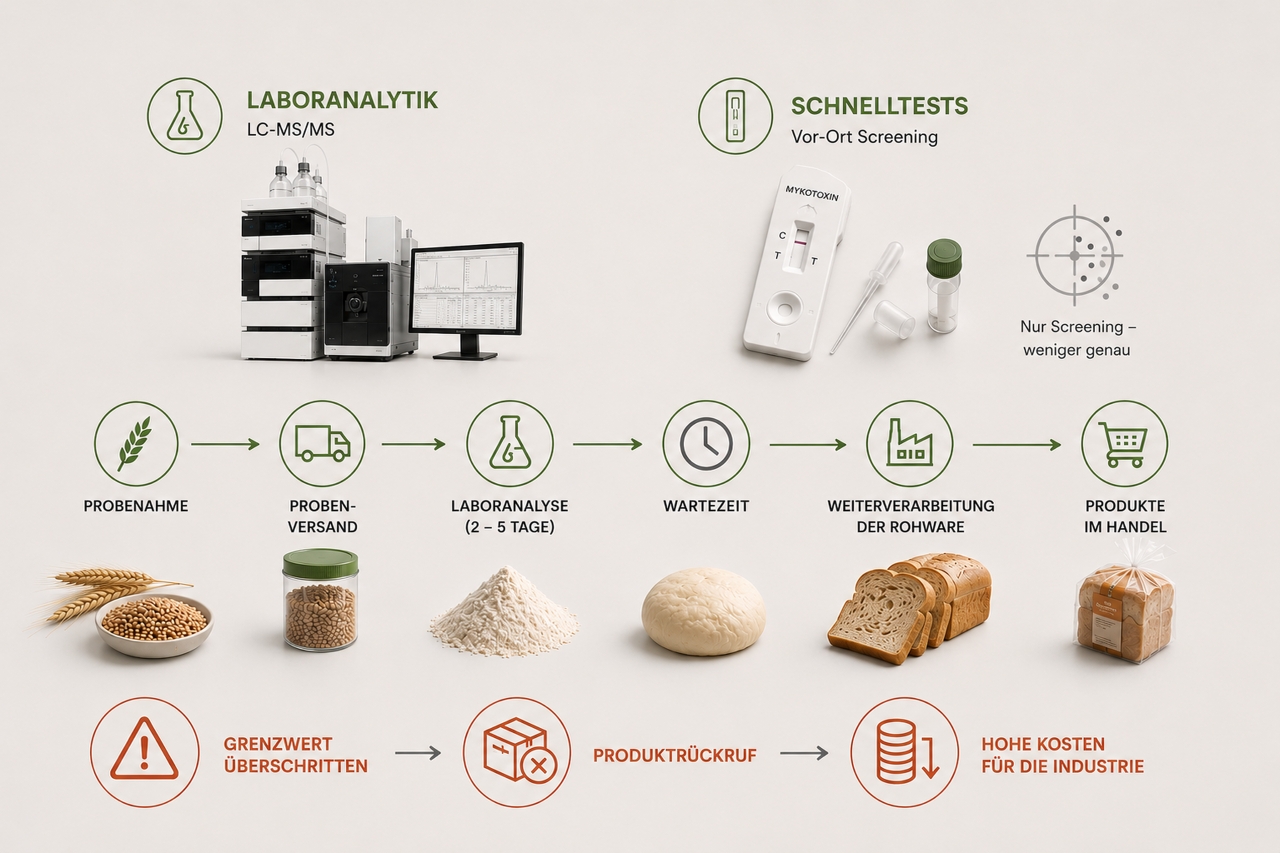
Conventional mycotoxin analysis is typically performed in laboratories using LC-MS/MS. While this method is highly sensitive, it is often associated with waiting times of several days. Rapid tests, although applicable directly on-site, are generally used only for screening purposes and often do not provide sufficiently accurate quantitative results.

As raw materials are frequently processed further during the time required for laboratory analysis to prevent spoilage, product recalls often occur retrospectively when lab results reveal that regulatory limits have been exceeded. This leads to annual costs amounting to billions across the food industry.

Infographic: conventional laboratory analysis (LC-MS/MS) and on-site rapid tests — from sampling to product recall

Our technology

in collaboration with Fraunhofer

To address this significant health and economic challenge, we have developed an innovative analytical solution in cooperation with the Fraunhofer IME and the Fraunhofer IPA. Our technology enables the sensitive and quantitative detection of mycotoxins directly on-site within approximately one hour. We do not use organic solvents, making this an exceptionally environmentally friendly enrichment process. Detection is then carried out using the measurement head of our magnetic reader. The magnetic nanoprobes act as signal carriers, enabling the bound analytes to be quantitatively detected via a magnetic measurement signal.

Learn more
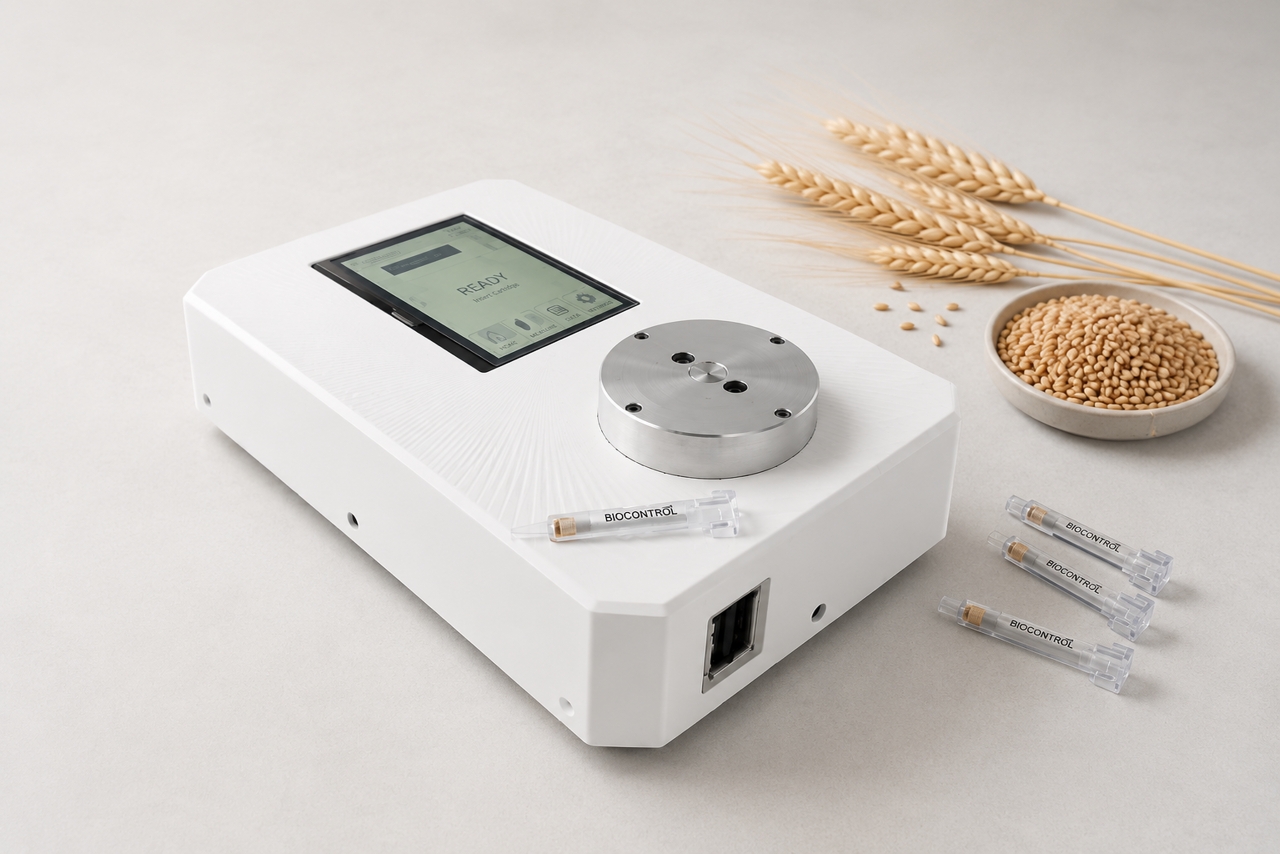
Magnetic reader instrument for rapid mycotoxin analysis with sample tubes and grain

Your benefits

Results

Results

directly on-site in less than one hour

Measurements

Measurements

Quantitative and sensitive measurements, even below regulatory limits

Waiting times

Waiting times

No sample shipment and no long waiting times for laboratory results

Fewer recalls

Fewer recalls

Reduction of product recalls and food losses

Faster raw material release

Faster raw material release

Reduced storage and refrigeration requirements due to faster raw material release

Quality assurance

Quality assurance

More efficient quality assurance along the entire production chain

Contact us!

Gain faster decisions and more control over your raw materials and products. If you are interested or have any questions, please get in touch.

GeneCon International GmbH

Gerbergasse 12
52511 Geilenkirchen
Deutschland

+49 (0) 24 51 - 91 26 26 1
+49 (0) 173 - 53 41 373

##!c2VydmljZUBnZW5lY29uLWludC5kZQ==!##